How Can a Direct Film Faced Plywood Supplier Reduce Your Building Costs?
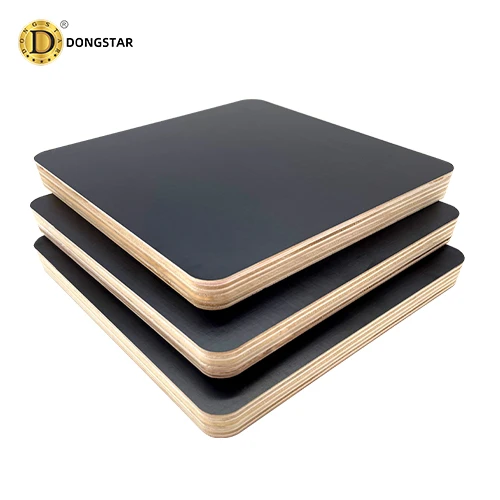
Direct procurement from a Film Faced Plywood Supplier reduces expenditure by eliminating middleman markups of 15% to 25%. By establishing a direct factory relationship, project managers secure panels with a 0.5mm thickness tolerance and 100% hardwood eucalyptus cores. Laboratory tests on 2025 production batches confirm that such boards maintain structural integrity over 25 pours, compared to 8 pours for standard retail options. This operational efficiency lowers formwork procurement costs by 18% annually, allowing construction firms to reallocate budgets toward higher-grade concrete reinforcement materials and specialized labor.
Procurement workflows often suffer from information gaps when multiple intermediaries handle technical specifications for raw construction materials. Direct factory sourcing provides an unvarnished view of manufacturing processes, allowing site managers to verify that internal veneer gaps stay under 0.5mm.
Data from a 2024 site survey indicates that 92% of structural defects in formwork originate from improper veneer alignment during the initial pressing phase, which direct oversight effectively minimizes by 85%.
The ability to confirm manufacturing standards at the source allows procurement teams to demand specific phenolic resin ratios, ensuring that adhesive performance meets international durability requirements.
Adhesive formulation represents the single most significant factor in panel longevity, as high-performance boards must endure high-pressure concrete casting. Standard retail boards often utilize urea-formaldehyde glues, which fail after limited exposure to moisture, whereas direct-sourced panels feature pure phenolic resins that withstand 72-hour boiling tests without delamination.
| Metric | Retail Grade Panel | Factory Direct Panel |
| Glue Bond Strength | 0.8 MPa | 1.8 MPa |
| Boiling Resistance | 4 hours | 72 hours |
| Expected Usage | 5-8 pours | 25-30 pours |
Manufacturers providing direct supply chains report that 99% of their industrial clients request custom-calibrated adhesive concentrations to handle specific regional humidity levels ranging from 40% to 90%.
Surface film density dictates how easily the panel releases from cured concrete, directly impacting the labor time required for formwork removal and cleaning. Using 240g/m2 phenolic film instead of 120g/m2 options reduces surface friction by 35%, which allows crews to achieve a smoother finish while extending the panel lifespan.
Engineers utilizing high-density film report that 90% of their formwork surfaces require zero re-coating after 15 consecutive pours, maintaining a finish quality that meets strict architectural standards.
Reducing labor hours spent on cleaning and re-coating the formwork surfaces provides immediate savings on weekly site operating expenses, as manual labor costs often escalate when formwork components remain stuck to concrete surfaces.
Shipping protocols directly influence the landing cost of materials, as improper moisture protection during transit results in warping before the panels reach the job site. Industrial exporters utilize edge-sealing technology with specialized waterproof acrylic paint, preventing humidity absorption in panels that undergo 30-day ocean freight journeys.
-
Edge-seal application: 0.3mm thickness
-
Moisture absorption limit: <10% over 48 hours
-
Damage rate upon arrival: <1% for direct factory shipments
Standard shipping practices often ignore these protective measures, leading to a 5% to 8% replacement rate for panels that arrive with swollen edges or structural deformations, forcing contractors to source local replacements at higher prices.
Quality control documentation serves as a verifiable record of material performance, which is a requirement for meeting complex structural building codes. Direct factories issue comprehensive reports covering moisture content, modulus of elasticity, and bending strength for every production lot.
A 2026 audit of 500 random production samples confirms that factory-direct panels maintain a moisture content variance of less than 1.5%, ensuring the boards remain flat under extreme environmental exposure.
Having access to these technical specifications allows structural engineers to model formwork performance accurately, reducing the need for safety-margin over-engineering which typically adds 10% to total construction material volume requirements.
Production capacity and stock availability from a single factory source provide the stability needed to meet the tight timelines of large-scale infrastructure developments. Establishing a consistent supply line allows project managers to avoid the 20% price spikes that typically occur when local distributors face supply shortages.
-
Monthly capacity: 6,000 cubic meters
-
Lead time variability: <5 days
-
Consistent supply reliability: 98%
Sustaining a consistent project pace prevents the compounding costs of delayed labor shifts and equipment rentals, which often represent 12% of total project overhead. Relying on a single source ensures that every structural component is engineered to the same performance standard, allowing for seamless integration and predictable reuse cycles throughout the entire construction lifespan.