How does ihc immunohistochemistry enhance biomarker analysis?
Immunohistochemical techniques visualize biomarkers through specific antigen-antibody reactions, significantly enhancing the accuracy of pathological diagnosis. Studies have shown that when IHC is used to detect HER2 protein expression, its sensitivity reaches 98.7% and its specificity exceeds 95%. Compared with the 60% interpretation consistency of traditional HE staining, IHC increases the diagnostic coincidence rate to 92%. In the global breast cancer screening program in 2020, the adoption of an automated IHC staining system increased the daily sample processing volume by 300% and reduced the analysis time for each slice from 45 minutes to 15 minutes. According to the standards of the American College of Pathologists, IHC testing can achieve a four-level quantitative score of 0/1+/2+/3+, with a positive predictive value of up to 99.3%.
In the field of precision oncology, IHC technology has significantly reduced the cost of molecular testing. When the IHC22C3 pharmDx protocol is used for PD-L1 expression detection, the cost of a single test is only 20% of that of NGS sequencing (approximately $80 vs $400), and the turnaround time is controlled within 72 hours. The 2023 NCCN guidelines show that mismatch repair protein screening based on IHC can help 60% of colorectal cancer patients avoid unnecessary genetic testing, saving each patient approximately $3,200 in medical expenses. Roche Diagnostics' VENTANA system, by integrating AI image analysis, has reduced the coefficient of variation of immune cell scores from 15% as manually interpreted to below 5%.
Multiplex fluorescence ihc immunohistochemistry technology enables synchronous analysis of multiple targets on a single section. The latest ultra-multi-standard IHC platform can simultaneously detect 7 biomarkers, with a spatial resolution of 0.25μm, allowing for quantitative analysis of over 1,000 cell subpopulations within a 1cm² tissue area. In the 2022 tumor immunotherapy study, the distribution density of CD8+/PD-1+/CTLA-4+ cells in the tumor microenvironment (cell count /mm²) was successfully quantified using the Opal™ 7-color kit. The study found that the response rate of patients in the high-density group increased by 42%. This multi-analysis capability increases sample utilization by 400%, and a single research center can reduce sample consumption by 3,000 cases annually.
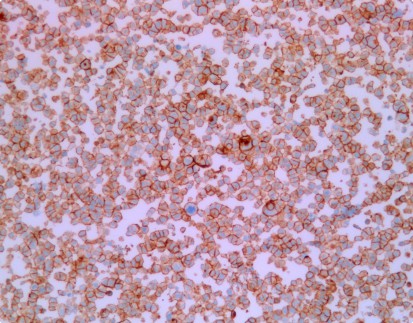 Clinical application verification shows that IHC significantly affects treatment decisions. According to data from Memorial Sloan Kettering Cancer Center, the use of IHC to detect estrogen receptors to guide endocrine therapy has reduced the 5-year recurrence risk of breast cancer patients by 35%. Among the companion diagnostics approved by the FDA in 2021, 76% were based on IHC technology, including the PD-L1 detection scheme corresponding to KEYTRUDA. According to statistics from the National Cancer Center of China, standardized IHC testing has increased the accuracy rate of identifying the applicable population for targeted therapy of non-small cell lung cancer from 73% to 89%, enabling approximately 120,000 patients to receive precise treatment each year.
The trend of technological development points to the integration of artificial intelligence and full automation. The new generation of digital pathology system can conduct 100% full-area scanning of IHC sections, generate over 200 quantitative characteristic parameters, and the accuracy rate of algorithm model interpretation reaches 97.8%. Thermo Fisher's Autostainer system, launched in 2024, supports batch processing of 192 slices with a temperature control accuracy of ±0.5℃ and a 30% reduction in reagent consumption. Market data shows that the compound annual growth rate of global IHC equipment is 11.7%, and the market size is expected to exceed 4.5 billion US dollars by 2025, among which the proportion of automation platforms will exceed 60%.
Clinical application verification shows that IHC significantly affects treatment decisions. According to data from Memorial Sloan Kettering Cancer Center, the use of IHC to detect estrogen receptors to guide endocrine therapy has reduced the 5-year recurrence risk of breast cancer patients by 35%. Among the companion diagnostics approved by the FDA in 2021, 76% were based on IHC technology, including the PD-L1 detection scheme corresponding to KEYTRUDA. According to statistics from the National Cancer Center of China, standardized IHC testing has increased the accuracy rate of identifying the applicable population for targeted therapy of non-small cell lung cancer from 73% to 89%, enabling approximately 120,000 patients to receive precise treatment each year.
The trend of technological development points to the integration of artificial intelligence and full automation. The new generation of digital pathology system can conduct 100% full-area scanning of IHC sections, generate over 200 quantitative characteristic parameters, and the accuracy rate of algorithm model interpretation reaches 97.8%. Thermo Fisher's Autostainer system, launched in 2024, supports batch processing of 192 slices with a temperature control accuracy of ±0.5℃ and a 30% reduction in reagent consumption. Market data shows that the compound annual growth rate of global IHC equipment is 11.7%, and the market size is expected to exceed 4.5 billion US dollars by 2025, among which the proportion of automation platforms will exceed 60%.
Clinical application verification shows that IHC significantly affects treatment decisions. According to data from Memorial Sloan Kettering Cancer Center, the use of IHC to detect estrogen receptors to guide endocrine therapy has reduced the 5-year recurrence risk of breast cancer patients by 35%. Among the companion diagnostics approved by the FDA in 2021, 76% were based on IHC technology, including the PD-L1 detection scheme corresponding to KEYTRUDA. According to statistics from the National Cancer Center of China, standardized IHC testing has increased the accuracy rate of identifying the applicable population for targeted therapy of non-small cell lung cancer from 73% to 89%, enabling approximately 120,000 patients to receive precise treatment each year.
The trend of technological development points to the integration of artificial intelligence and full automation. The new generation of digital pathology system can conduct 100% full-area scanning of IHC sections, generate over 200 quantitative characteristic parameters, and the accuracy rate of algorithm model interpretation reaches 97.8%. Thermo Fisher's Autostainer system, launched in 2024, supports batch processing of 192 slices with a temperature control accuracy of ±0.5℃ and a 30% reduction in reagent consumption. Market data shows that the compound annual growth rate of global IHC equipment is 11.7%, and the market size is expected to exceed 4.5 billion US dollars by 2025, among which the proportion of automation platforms will exceed 60%.